Save the date
At BNA2027, Professor Madeleine Lowery will explore these questions as part of our Neurotechnology and Methods theme, supported by our Festival Partner, Neuroscience Ireland.
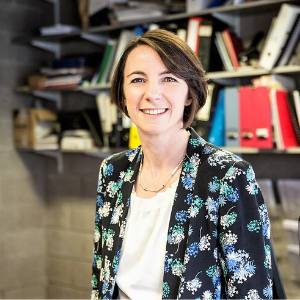
Madeleine is Full Professor in the School of Electrical and Electronic Engineering at University College Dublin, where she is also Head of Subject for Biomedical Engineering. She leads an interdisciplinary research team working in neuromuscular systems and neural engineering, applying engineering approaches to understand the nervous system in relation to movement, in both health and disease.
Her research spans electromyography, electrical stimulation, deep brain stimulation, neural control of movement and the development of technologies to improve impaired motor function.
With a career spanning engineering, neuroscience and biomedical research, Madeleine brings a perspective that crosses traditional disciplinary boundaries. She is also Past-President of the International Society of Electrophysiology and Kinesiology and has received recognition including the Royal Academy of Medicine in Ireland Graves Medal and the Delsys International Prize for Innovation in Electromyography.
Ahead of BNA2027, we spoke to Madeleine about her research, the rapid development of neurotechnology and what she hopes delegates will take away from her plenary session.
Your research sits at the intersection of engineering, neuroscience and movement. What first drew you to this area, and what do you find most exciting about working across these disciplines?
"Since I was a student, I have always been interested in the intersection of engineering and medicine. Initially I was drawn to the application of engineering to solve problems in physiology and medicine. This brought me into the field of neural control of movement, understanding the changes that take place as we fatigue and age, and with different neurological disorders. Engineering methods offer us the potential to develop solutions that can work with the nervous systems to restore or replace lost function. The most exciting part for me is working in an area that is evolving rapidly, where we can use engineering approaches to address complex and interesting questions about how the nervous system works, how it adapts and how function can be restored, ultimately to improve people’s quality of life."
Neurotechnology is developing rapidly, from neural interfaces and electrical stimulation to new approaches for understanding movement. What developments are you most excited about, and where do you see the biggest opportunities for neuroscience in the years ahead?
"Advances in technology that are enabling the development of miniaturised neural interfaces that can seamlessly integrate with the nervous system, and that can both sense and stimulate offer the potential for more precise control of neural stimulation and individualised treatment for a range of neurological conditions. Combined with the identification of new therapeutic targets for stimulation and improved understanding of function and dysfunction in the neural circuits involved, I think this offers many exciting opportunities and will open new avenues for emerging treatments for a range of neurological disorders."
You’ll be joining us in Belfast for BNA2027 as a plenary speaker in our Neurotechnology and Methods theme. Without giving too much away, what would you like delegates to take away from your session?
"I would like to share my own experience in working in the field of neural engineering and hopefully show how the application of classical engineering approaches to the nervous system, such as computational modelling, signal analysis and control, can provide insight into fundamental mechanisms and guide the design of next generation devices for neuromodulation."
Madeleine will be first up in the programme, opening the Neurotechnology and Methods theme at BNA2027 – the 8th International Festival of Neuroscience, taking place in Belfast from 25–28 April 2027.
Date: Monday 26th April 2027
Time: 09:00
Location: BNA2027, ICC, Belfast
Supported by Neuroscience Ireland, her plenary session will bring together perspectives from engineering and neuroscience to explore the methods and technologies helping us understand, measure and influence the nervous system.
BNA2027 brings together researchers, clinicians, industry, policymakers and patient representatives from across neuroscience for four days of science, collaboration and community.
Early bird registration is now open. Explore the programme and plan your BNA2027 experience.