Save the date
For many students and early-career researchers, attending a major international conference can be an important step in building confidence, sharing their research and developing connections – but the cost of travel and accommodation can be a significant barrier.
That’s why we offer BNA Festival Bursaries of up to £200 to help BNA members with the costs of attending the BNA International Festival of Neuroscience.
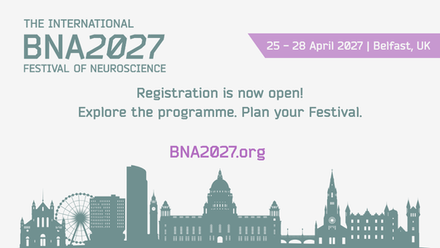
For BNA2027 in Belfast, 25–28 April 2027, bursaries can contribute towards travel and accommodation costs, helping make the Festival accessible to more members of our community.
But the value of attending a Festival can go far beyond the cost of getting there.
Four years ago, Filippo Dall’Armellina, PhD - received a BNA Festival Bursary while undertaking his PhD at the University of Liverpool. Here, he reflects on how the support enabled him to attend the Festival of Neuroscience, present his research, build connections and become part of a wider scientific community – experiences that have continued to influence his career.
If you’re considering attending BNA2027 but financial constraints could make it difficult, we encourage you to apply. Applications are open until 31 January 2027. You must be a BNA member and have registered to attend BNA2027 to apply.
Read Filippo’s story below, and find out how a BNA Festival Bursary could help you make the most of your BNA2027 experience.
Filippo Dall’Armellina, PhD
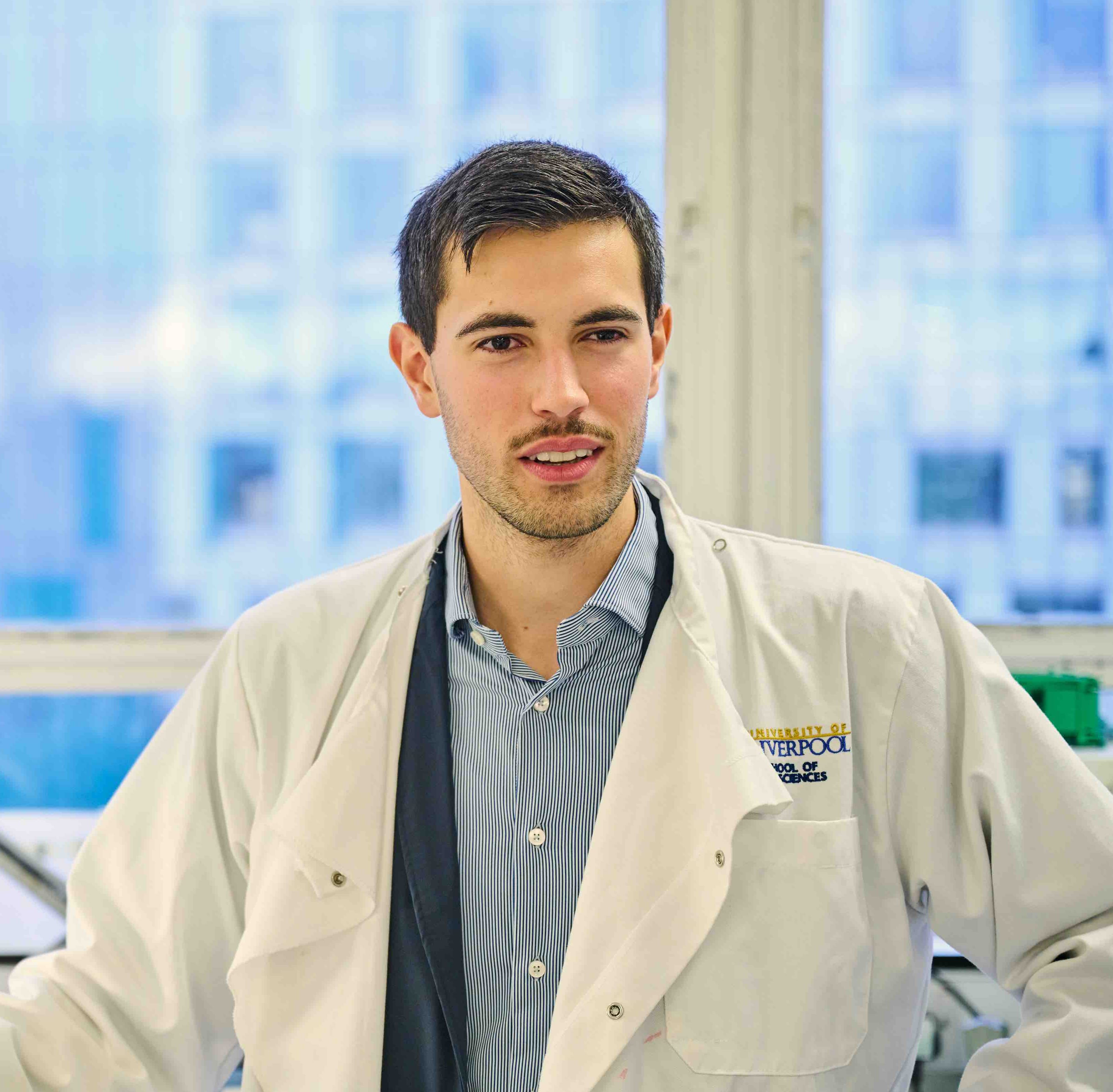
When I received a BNA Travel Bursary in 2022, I was an early-career researcher with a growing interest in understanding how proteins traffic lipids across organelle membranes inside cells and how their dysfunction contributes to disease. At the time, I was in my first year of a PhD in Biochemistry at the University of Liverpool. Today, I continue to collaborate on academic research projects, and I stay closely connected to the scientific community and to research that spans neuroscience, structural biology, and biochemistry.
The bursary enabled me to attend the Festival of Neuroscience in Brighton. Like many PhD students and early-career researchers, travel funding was limited and attending national and international conferences often depended on securing external support. The BNA Travel Bursary removed an important financial barrier, allowing my travel costs to be covered without drawing from my PhD bench fees, which were intended to support experimental work. This meant I could present my research to an international audience, receive valuable feedback, and engage directly with scientists whose work had inspired my own.
One of the greatest benefits of attending the meeting was the opportunity to build my professional network. Conferences are where ideas develop into collaborations, where informal conversations can shape future projects, and where young researchers gain confidence by becoming part of the wider scientific community. Presenting my poster and discussing my work with established researchers gave me a new perspective on my research and reinforced my motivation to pursue a career in neuroscience.
Looking back, I appreciate even more how important that experience was. At the time, it felt like an exciting opportunity to attend a conference. It represented something much larger. It gave me confidence that my work was valued and helped me build relationships that have lasted well beyond the meeting itself. I am still in touch with several researchers I met at the conference, and although many of us now work in different areas of neuroscience, I continue to follow their research with both personal and professional interest. Seeing their work published in leading journals and engaging with the wider scientific community has allowed me to remain connected to a network of talented scientists. Some of the discussions and ideas that emerged from those interactions later proved valuable in shaping aspects of my own research, including work that contributed to my publication in Protein Science.
Since then, my career has evolved. Following my PhD, I continued investigating the molecular basis of neurodegenerative diseases, with a particular focus on modelling previously uncharacterised molecular structures. Recently, I had the privilege of seeing my story featured in Science, alongside participating in the Science Podcast to discuss the importance of science communication with a broader audience. These milestones have been incredibly rewarding and reflect years of collaborative work across multiple research groups. Scientific careers are built through a series of opportunities, and early support often has a disproportionate impact. Attending conferences, presenting research, and building professional networks all contribute to developing the confidence and connections needed to progress, whether in academia or beyond.
For anyone considering applying for a BNA Travel Bursary, my advice is simple: just do it. Conferences are about much more than presenting a poster or giving a talk. They expose you to new ideas, introduce you to future collaborators, and help you become part of a wider scientific community.
Early-career researchers often face significant financial constraints, and without schemes like this, many would miss opportunities to share their work and establish valuable professional networks. I remain grateful for the support I received. The bursary did much more than fund a conference trip, it removed a financial obstacle at a critical stage of my PhD, protected resources that were needed for my experimental research, and opened doors that have continued to influence my career through lasting collaborations, new ideas, and an enduring scientific network. I hope it continues to do the same for many young neuroscientists in the years ahead.