
Save the date
What can we learn from people who reach 100 years old while remaining cognitively healthy?
It’s a question at the heart of the work of Professor Henne Holstege, whose research focuses on identifying genetic and biological factors that may protect against – or increase the risk of – neurodegenerative disease.
We’re delighted to introduce Professor Holstege as one of the plenary speakers at BNA2027 – the 8th International Festival of Neuroscience, taking place in Belfast from 25–28 April 2027. Supported by Alzheimer’s Research UK, Henne will deliver a keynote for our Neurodegeneration and Ageing theme, sharing insights from her research into healthy cognitive ageing, resilience and the factors that may help protect the brain from neurodegeneration.
Date: Monday 26th April 2027
Time: 17:05 – 17:50
Location: BNA2027, ICC, Belfast
Her work offers a fascinating perspective on one of neuroscience’s biggest questions: why do some people remain cognitively healthy into very old age, while others experience cognitive decline?
Henne established the ‘100-plus Study’, a cohort of cognitively healthy centenarians who are enriched for protective genetic and biological factors.
By studying people who have reached exceptional old age while maintaining their cognitive health, the research team aims to identify factors that may contribute to resilience against cognitive decline and neurodegenerative disease.
At the other end of the cognitive spectrum, Henne’s lab also contributes to large international collaborations analysing sequencing data from thousands of people with Alzheimer’s disease and cognitively healthy controls.
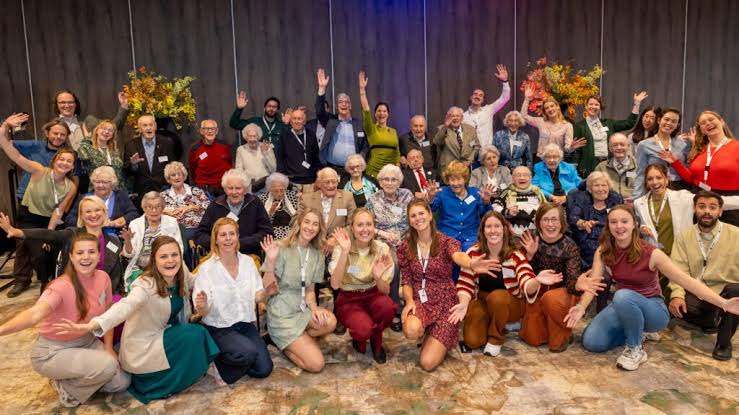
Image taken at 100-plus Day 2025
Together, these approaches provide an opportunity to investigate both risk and resilience – asking not only what might contribute to neurodegenerative disease, but also what might protect the brain.
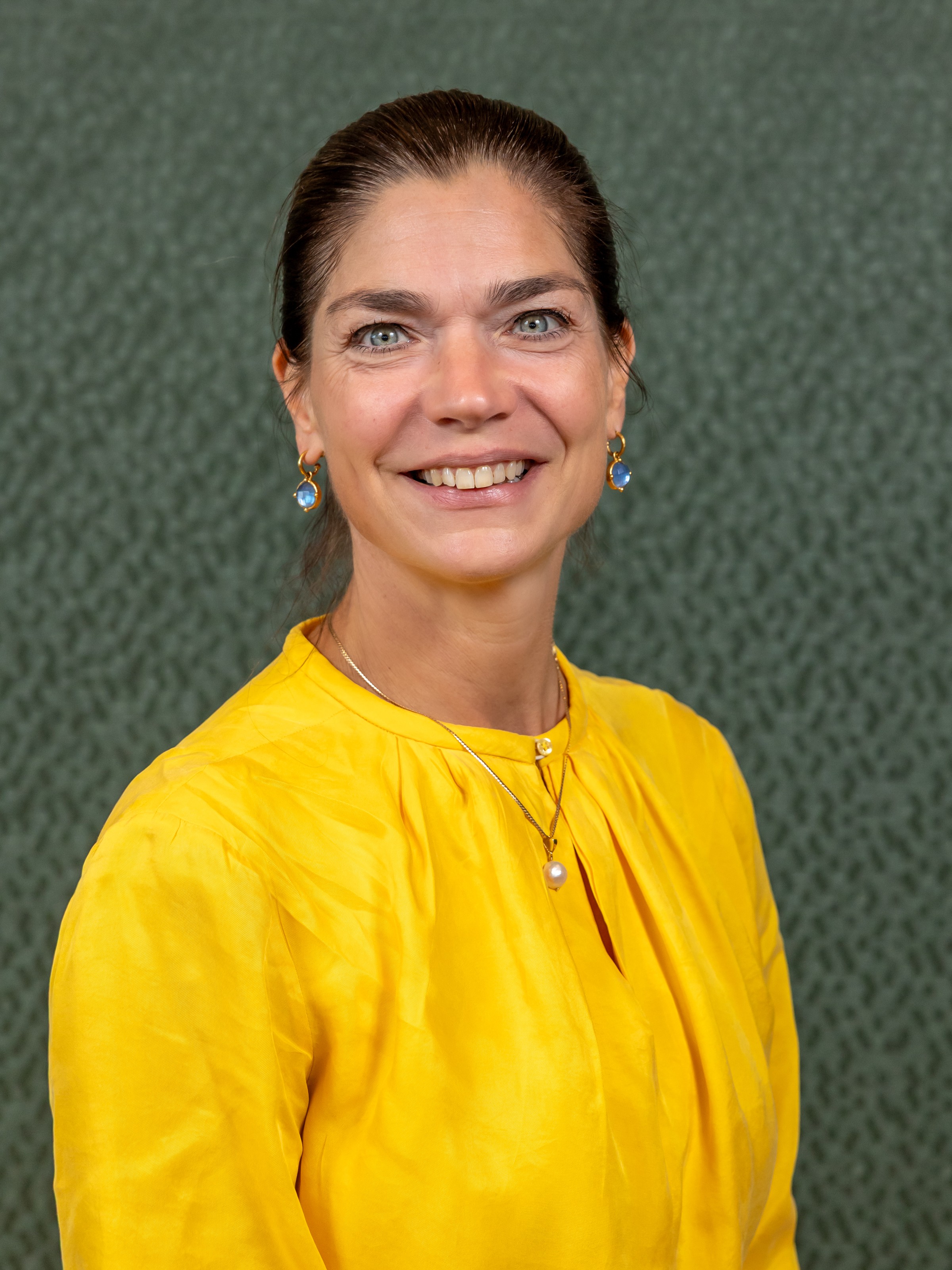
Henne is a full professor at the VIB/KU Leuven Center for Neuroscience in Belgium and an associate professor in the Department of Human Genetics at Amsterdam UMC in the Netherlands.
She majored in biochemistry at the University of Leiden and spent a year at Harvard University in Boston, investigating the genetics associated with satiety. During her PhD at the Netherlands Cancer Institute, she studied the genetics of breast cancer.
For more information about her team and the projects: See www.holstegelab.eu.
Her work has also received support from Alzheimer’s Research UK, whose funding helps researchers tackle the causes, diagnosis, prevention and treatment of dementia.
Your research focuses on why some people remain cognitively healthy into very old age. What have the 100-plus Study participants taught you about healthy ageing and resilience?
"One of the most important things they have taught us is that there is not just one way to reach 100 with a healthy brain. These individuals have been exposed to more than a century of ageing, and yet they have escaped or substantially delayed cognitive decline. In that sense, they represent an extraordinary natural experiment in healthy ageing. Some of our centenarians seem largely to avoid the changes associated with Alzheimer’s disease, while others have substantial Alzheimer pathology in their brains and yet remain cognitively healthy. That is particularly fascinating, because it suggests that the brain can be protected both by resisting disease pathology and by remaining resilient in its presence.
Genetically, these centenarians are enriched for protective factors and depleted of risk factors associated with Alzheimer’s disease. We are now trying to understand what those protective factors actually do at a molecular and cellular level. For example, some appear to keep the brain’s immune system and its endolysosomal mechanisms functioning effectively into extreme old age. If we can understand how they do that, we may ultimately be able to translate some of those natural protective mechanisms to people who were not fortunate enough to inherit them."
What do you think neuroscience still needs to understand about preventing or delaying neurodegenerative disease?
"Genetics has already given us important clues: we can see that centenarians are enriched for genetic variants that protect against Alzheimer’s disease. But finding a protective variant is only the beginning. What we really need now is mechanism. We need to understand how these protective genetic variants differentially regulate brain cells: which molecular pathways do they affect, in which cell types, and at what stage of ageing or disease is this protection most important? Once we understand that chain from gene to mechanism to protection, we can start asking whether we can reproduce the same effect therapeutically in people who did not inherit the protective variant.
That is where I think prevention can become much more precise: learning from the natural protection we observe in centenarians and translating those mechanisms into interventions before irreversible damage has occurred."
You’ll be speaking at BNA2027 as a keynote for the Neurodegeneration and Ageing theme. What are you looking forward to about bringing this research to the Festival – and what would you like delegates to take away?
"I hope delegates will come away with the idea that studying resilience and resistance can be just as informative as studying disease. Much of neuroscience asks what goes wrong in people who develop neurodegenerative disease. Our centenarians allow us to turn that question around: what went right?
They represent a natural experiment: they show us that maintaining cognitive health into extreme old age is biologically possible. They have already achieved the outcome that we ultimately want to achieve for everyone. Our challenge now is to understand the mechanisms that made that possible, and to learn whether we can reproduce some of that natural protection in the wider population."
Henne is just one of the outstanding speakers contributing to the BNA2027 scientific programme.
Across 11 themes, the Festival will bring together researchers, clinicians and neuroscience professionals to explore the latest developments across the field – from fundamental neuroscience and neurodegeneration to cognition, mental health, technology and beyond.
The scientific programme is now available to explore, so you can start planning your Festival and discovering the sessions, speakers and research you won’t want to miss.
Early bird registration is now open - so this is the perfect time to secure your place.
BNA2027 takes place in Belfast from 25–28 April 2027.
Whether you’re joining to hear the latest research, present your work, develop your career, make new connections or simply be part of the international neuroscience community, we look forward to welcoming you to Belfast.