
Credibility in Neuroscience
Manifesto for Credibility in Neuroscience
Our commitments
The BNA’s credibility manifesto is organised around three commitments:
-
Supporting a shift in research culture that is welcomed and desired by the whole neuroscience community.
-
Equipping all neuroscientists, regardless of career stage, location, research area or method, with the skills, knowledge, tools and processes they need to carry out research that stands the test of time.
-
Changing the landscape in which neuroscientists operate, so that the influences which drive neuroscience research also drive the most credible research.
Building Lasting Excellence in Neuroscience
We are equipping neuroscientists - regardless of career stage, location, or specialism - with the skills, knowledge, and tools they need to produce research that stands the test of time. Through our Credibility Toolkits, alongside our Credibility in Neuroscience Award and Credibility Bursary, we support a positive shift in research culture that is inclusive, practical, and driven by the needs of the neuroscience community.


BNA Credibility Toolkits - A set of practical guides to use in your research.
We know that many people support the principles of credibility, but are yet to try recent initiatives to increase reproducibility and open science, or just aren't sure how to go about making their experimental approaches more robust, reproducible and replicable. We have therefore prepared a set of short guides to help give practical pointers to how you can increase credibility in neuroscience.


Core practices for credible neuroscience
Explore practical guidance on research practices that can strengthen the credibility, transparency and reliability of neuroscience. These resources cover core research principles, preregistration and Registered Reports, and preregistration posters - helping researchers and conference organisers put credible research into practice.



Credibility Advisory Board
The Credibility Advisory Board brings together people with varied expertise and perspectives across neuroscience research sectors to guide the BNA’s credibility work. The Board has supported the programme through strategic advice, content development, events and discussion of emerging needs across neuroscience. Details of our current CAB members can be found here.
Our CAB alumni, including Madeline Lancaster, Rik Henson, Kaitlyn Hair, Stafford Lightman, Georgina Hazel, Uta Frith, Dorothy Bishop, Anthony Isles, Hugh Marston, Chris Chambers, Verena Heisse, Anne Cooke, Siobhan Crilly and Joseph Clift, have all made important and valuable contributions to BNA’s promotion of credible research practice.

Rebecca Woods

Michael Ashby
Mike Ashby is a Senior Lecturer at the University of Bristol and the BNA's first Trustee for Credibility in Neuroscience following election by the BNA membership in 2022. His research interests focus on how anatomical and synaptic plasticity coordinate to change the structure and function of neural circuits in the mammalian cortex. For the last nine years, Mike has been a member of the University of Bristol Open Access Steering Committee, which has given him great insight into the importance of open and transparent publication of findings and a passion for increasing use of coding of analytical and modelling tools across neuroscience. Mike has also published on novel statistical methods for limiting potential impact of pseudoreplication in nested, hierarchical experimental design.

Olivia Kowalczyk
Olivia Kowalczyk is a Research Fellow at the Department of Neuroimaging, King's College London and the Wellcome Centre for Human Neuroimaging, UCL. Her interests span a diverse range of topics including spinal fMRI, methods development, neuropharmacology, psychiatry, and meta-science. In her current research work, she focuses on studying the neural underpinnings of pain perception and their pharmacological modulation. Beyond her primary research work, Olivia cultivates her passion for open research by co-organising the RIOT Science Club, a seminar series raising awareness and providing training in reproducible, interpretable, open, and transparent research practices, and by serving as a UKRN Local Network Lead at King's College London.

Kaitlyn Hair
Kaitlyn Hair is a postdoctoral researcher within the CAMARADES group at the University of Edinburgh. During her PhD, she worked in collaboration with industry and academic partners to conduct large systematic reviews of the evidence from animal models of Alzheimer’s disease. To counter the challenges of this work, she began developing automated tools to help organise and make sense of the vast quantities of published research in this area. She is also a strong advocate for open science practices and is interested in evaluating interventions to improve research quality and reproducibility across biomedical research.

Faisal Mushtaq
Faisal Mushtaq is a Cognitive Neuroscientist and Director of the Centre for Immersive Technologies at the University of Leeds. Faisal's research sits at the interface between Neuroscience, Psychology, Engineering, and Computer Science. He is founder of the Immersive Cognition Lab which specialises in the study of learning and skill acquisition using virtual environments. With Dr Yuri Pavlov, Faisal co-leads the #EEGManyLabs project, a network of >200 laboratories working on large scale replications of the most influential studies in the field. Faisal is also a member of the Global Brain Consortium, where he is developing methods for large-scale low-cost acquisition of neural data through a novel citizen science methodology.
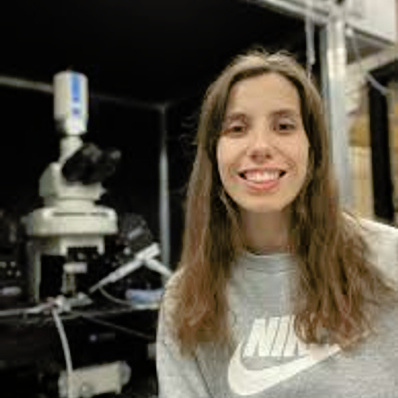
Ana Dorrego-Rivas
Ana Dorrego-Rivas is a research associate at King’s College London. Her research is focused on the development and maintenance of neuronal polarity in vivo and how it impacts neuronal function and integration into brain circuits. Ana is interested in open science practices, preprints and science reproducibility, and advocates for such causes at initiatives like ASAPbio, preLights and eLife Innovation Sprint.

John Huxter
John Huxter is Associate Director and Cognition Lead at Transpharmation, and is CAB's industry representative. John has had more than 25 years of neuroscience experience in both academia and industry, and across diverse therapeutic areas including psychiatric disorders, chronic pain, and neurodegeneration. With a background in both behaviour and electrophysiology (UCL, University of Bristol, Oxford’s MRC Analytical Neuropharmacology Unit), he has led biomarker discovery and assay development efforts at both Pfizer and Eli Lilly before joining Transpharmation in 2020. John is passionate about the translational potential for preclinical neuroscience, and works closely with the Transpharmation teams in the UK, Ireland, Poland and Canada to explore new opportunities for drug discovery and collaboration.

Emily Sena
Emily Sena is a Stroke Association Kirby Laing Foundation Senior Non-Clinical Lecturer at the University of Edinburgh. She is specialised in the validity of preclinical research. Her interests are in the use of meta-research approaches (research on research) to drive improvements in the validity, transparency and reproducibility of primary research using animal models of human diseases. Her work has informed laboratory practice guidelines, editorial policy and clinical trials design. Emily is the inaugural Editor-in-Chief of BMJ Open Science, and convenor of CAMARADES.

Laura Ajram
Laura studied Pharmacology at King’s College London (including a year in industry with GlaxoSmithKline) before completing her PhD at the Institute for Psychiatry, Psychology and Neuroscience on the topic of ‘the Neuropharmacology of Autism Spectrum Disorders’.
In 2021 Laura was awarded the ‘ELRIG Early Career Impact Award’ for making a ‘significant impact in the drug discovery community’, and in 2022, a prestigious Fellowship to the British Pharmacological Society in recognition of her ongoing contribution to the sector.
Laura has worked across NHS, charity, academic and pharmaceutical research settings to develop strategic cross-sector partnerships and accelerate neuroscience drug discovery efforts in mental health, dementia and motor neurone disease.
Laura is currently Chief Executive of the British Neuroscience Association, where she is responsible for delivering the vision, mission and strategy of the BNA and it’s subsidiary company, BNA Events Ltd.

Tatiana Rosenstock
Tatiana Rosenstock has had an exceptional career and has made significant contributions to the field of Neuroscience for 20+ years. Her work has focused on topics such as mitochondrial deregulation, transcription deregulation, and autophagy in neurodegenerative diseases, such as Huntington’s Disease, and Amyotrophic Lateral Sclerosis, and Schizophrenia.
At Sygnature Discovery, Tatiana is a Senior Principal Scientist overseeing various neuroscience-related projects in different sub-areas such as metabolism (mitochondrial function), biomarkers, microglial function and activation, and neuroplasticity. During this period, she has been working with distinct in-vitro models, named iPSC-derived neurons, primary cortical neurons, Alzheimer`s and Parkinson`s disease fibroblasts, neuroblastomas cell lines, tissue and biofluids from transgenics animal models of Alzheimer`s disease.
Get involved
Students and early career researchers
Students and early career researchers are often in the best position to build credible practices into their work from the start. A first step might be learning what preregistration is, using OSF to organise a project, presenting a preregistration poster or asking supervisors how data, code and materials will be managed.
Postgraduate researchers can consider preregistering one project, presenting planned work at a conference, or using an electronic lab notebook to keep a clear record of decisions and data. You can also look for publication formats that support transparent reporting, including Registered Reports, null results and detailed methods.
Principle investigators and lab leaders
Lab leaders can make credible practice easier for everyone in a group. This can include agreeing shared data management practices, supporting electronic lab notebooks, encouraging preregistration where appropriate, building code review or analysis checks into workflows, and recognising work that improves methods, documentation and reproducibility.
Research Institutions
Institutions can support credible neuroscience by providing infrastructure, training and recognition. This includes data storage, research software support, open research training, statistical advice, research integrity processes and promotion criteria that value quality, transparency and contribution rather than relying narrowly on publication venue.
The UK Reproducibility Network provides a route for institutions to connect with wider work on open and reproducible research. Institutional leaders should also consider how DORA and responsible research assessment principles can be embedded in hiring, promotion and internal funding.
Industry
Credibility is essential for translation. The commercial sector has extensive experience in study design, quality control, standard operating procedures and reproducibility across sites. Academia and industry can both benefit from earlier dialogue, clearer sharing of best practice and collaboration that starts before late-stage translation.
Clinical researchers
Credible clinical neuroscience depends on all well-conducted studies being reported, whether results are positive, negative, null or inconclusive.
Clinical researchers can support credibility by registering studies, reporting methods and results transparently, considering Registered Reports where appropriate, and advocating for publication of robust negative or null findings.
Publishers and funders
Journals and publishers can support credibility by accepting replication studies and null results, requiring comprehensive methods, encouraging data and code availability, supporting Registered Reports and aligning with transparency standards such as the TOP Guidelines.
Funders can support credibility by asking grant holders what they are doing to improve transparency and reproducibility, funding time and infrastructure for open practices, supporting replication and reanalysis where appropriate, and recognising outputs such as datasets, software, protocols and training materials.
Working in partnership to strengthen research credibility