Not just another AI event. This one asks harder questions - about identity, ethics, and what intelligence really means.
A unique opportunity to hear from leading voices and take insights back into your own work - leaving better equipped and more confident to engage in conversations at the intersection of neuroscience and AI.
Hear from ten outstanding speakers as well as the live debate: “Information is all you need?”
Karl Friston (UCL) vs Christopher Summerfield (University of Oxford / AI Security Institute), moderated by Heidi Johansen-Berg (University of Oxford)
AI and the Brain is a full-day event bringing together world-leading neuroscientists, AI researchers, clinicians and policymakers to explore one of the most fast-moving areas in science today.
• Can AI predict dementia earlier?
• Can machines truly learn like the brain?
• What are the risks of neurotechnology?
Register now to secure your place:
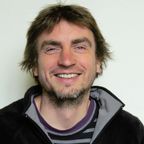
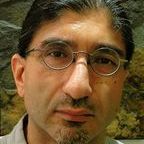
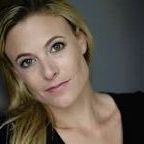
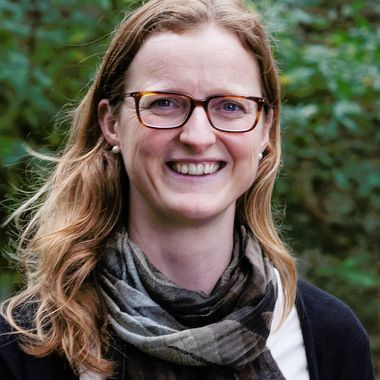
Featuring the following: (See full line up of speakers here)
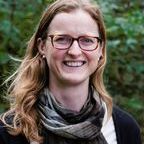
Pro-Vice Chancellor (Strategic Initiatives) and Associate Head (Research and Innovation) , University of Oxford

Professor of Imaging Neuroscience/Wellcome Principal Research Fellow, University College London

Professor of Cognitive Neuroscience, University of Oxford / UK AI Safety Institute


Professor of Cognitive Neuroscience, director of the Affective Brain Lab, University College London

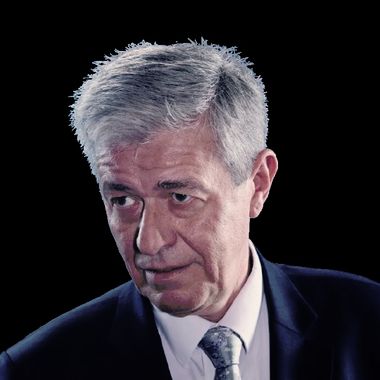
Pro-Vice Chancellor (Strategic Initiatives) and Associate Head (Research and Innovation) , University of Oxford
Professor Heidi Johansen-Berg is Professor of Cognitive Neuroscience and Pro-Vice-Chancellor for Strategic Initiatives at the University of Oxford. She is also a Fellow of the Royal Society and Chair of the REF2029 Unit of Assessment 4 (Psychology, Psychiatry and Neuroscience). Her pioneering research explores how the human brain changes its structure and function in response to learning, experience, and injury. Using advanced magnetic resonance imaging (MRI), her work sheds light on plasticity processes in the adult brain, demonstrating how acquiring new skills rewires biological networks. Her team translates these fundamental discoveries into clinical practice, exploring how targeted interventions like non-invasive brain stimulation can enhance motor recovery after a stroke. Furthermore, her broader research investigates how lifestyle factors, such as exercise, influence brain health and resilience across the lifespan
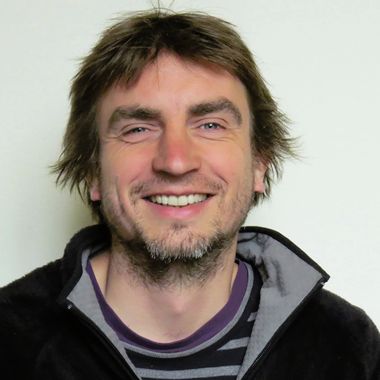
Professor of Imaging Neuroscience/Wellcome Principal Research Fellow, University College London
Professor Karl Friston is a theoretical neuroscientist and an authority on brain imaging at University College London (UCL). Widely recognised as one of the most highly cited neuroscientists in the world, he invented Statistical Parametric Mapping (SPM), the international standard for analysing fMRI and PET imaging data. Professor Friston is well known for his groundbreaking formulation of the Free Energy Principle and Active Inference. This unifying theory of brain function proposes that all biological systems are driven by a single imperative - to minimise "surprise" and maintain homeostasis by generating top-down predictions about the world. He proposes that this provides a mathematical framework for understanding sentience, learning, and biological self-organisation. In the context of artificial intelligence, his theoretical position offer a biologically plausible alternative to standard machine learning, advocating for "embodied" systems driven by survival and uncertainty-resolution rather than arbitrary reward functions.

Professor of Cognitive Neuroscience, University of Oxford / UK AI Safety Institute
Professor Christopher Summerfield is a Professor of Cognitive Neuroscience at the University of Oxford and Research Director at the UK AI Safety Institute (AISI). Bridging academia and industry, including his work with Google DeepMind, his research sits at the interface of neuroscience and AI. He explores how the learning rules of modern artificial intelligence offer quantitative models for human cognition. This is the central theme of his recent book, Natural General Intelligence: How understanding the brain can help us build AI (Oxford University Press, 2023). In it, he argues that human intelligence relies on a "scruffy" but highly effective toolbox of different learning mechanisms—such as generative modelling, reward learning, and social feedback. At the AISI, he applies these insights to biological and machine information processing to tackle the challenges of AI safety, algorithmic alignment, and the societal integration of frontier models.

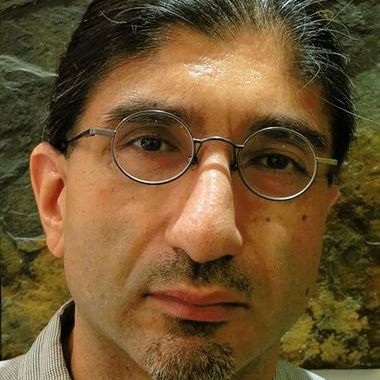
Director, Gatsby Computational Neuroscience Unit
Professor Maneesh Sahani is a British-based computational neuroscientist and machine-learning researcher known for his work on how the brain performs complex computations such as perception, learning, and decision-making. He is a Professor of Theoretical Neuroscience and Machine Learning at University College London (UCL) and serves as Director of the Gatsby Computational Neuroscience Unit, one of the world’s leading research centres linking neuroscience and artificial intelligence.
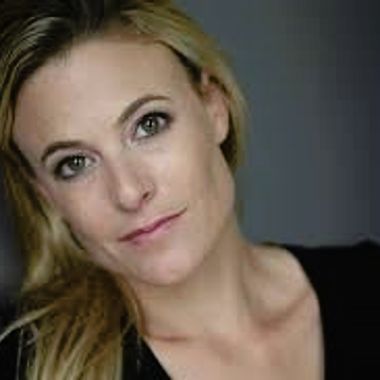
Professor of Cognitive Neuroscience, director of the Affective Brain Lab, University College London
Tali Sharot is the director of the Affective Brain Lab. She is a Professor of Cognitive Neuroscience in the department of Experimental Psychology and The Max Planck UCL Centre for Computational Psychiatry at University College London and on the faculty of the Department of Brain and Cognitive Sciences at MIT. Sharot is a Wellcome Disovery Award holder, a Wellcome Trust Senior Research Fellow, Chief Editor (neuroscience) for Science Advances and past President of the Society of Neuroeconmics. Sharot’s research integrates neuroscience behavioral economics and psychology to study how emotion and motivation influences people’s beliefs and decisions. Prof. Sharot’s award winning books – The Optimism Bias (2011) and The Influential Mind (2017) – have been praised by outlets including the NYT, Times, Forbes and more. Her latest book, Lokk Again, was co-authored with Cass Sunstein, in 2024. In addition to her academic role, Sharot has served as a consultant for global companies and government projects, as well as on the board of several companies. Her two TED talks have been viewed more than 17 million times total. She has written multiple Op-Eds for the NYT, Time, Guardian, Washington Post, CNN and others.Please accept {{cookieConsents}} cookies to view this content