

Matthew Brown

Mark Elliot

Valentina Escott-Price

Karl Friston

Heidi Johansen-Berg

Sieun Lee

Srikanth Ramaswamy
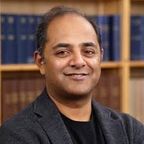
Narender Ramnani

Maneesh Sahani

Tali Sharot

Christopher Summerfield
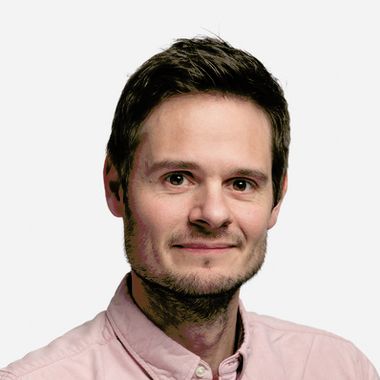
Dr Matthew Brown is a research-strategy leader working at the intersection of digital technology and global mental health. He is currently Head of Digital Technology, Mental Health & Life Sciences at Wellcome, where he leads strategic portfolios that accelerate the development, evaluation and responsible adoption of data-driven tools for mental health and the broader life sciences
Trained as a neuroscientist, Matthew holds a DPhil from the University of Oxford and has conducted research across cellular, circuit and cognitive neuroscience, with previous academic posts at Imperial College London and the University of Geneva. He brings this deep scientific grounding to his current work shaping large-scale research investments and collaborative programmes.
At Wellcome, Matthew manages portfolios spanning digital mental-health technologies, foundational neuroscience infrastructure, data access, software, and skills development. His work includes co-designing new models for international neuroscientific collaboration, supporting regulatory guidance for digital mental-health tools, and establishing capacity-building initiatives such as the first African Bioinformatics Institute.
Matthew has extensive experience working across academia, philanthropy, industry and regulation, and currently serves on several advisory and steering boards, including for the Alzheimer’s Disease Data Initiative and the MHRA. He is passionate about strengthening the neuroscience ecosystem through collaboration, open science and inclusive research cultures.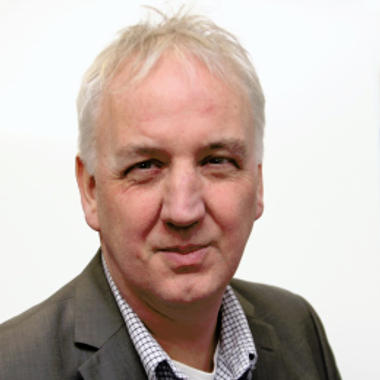
Mark Elliot has worked at the University of Manchester since 1996, mainly in the field of statistical confidentiality, founding the international renowned Confidentiality and Privacy Research Group (CAPRI) in 2002, and has managed numerous research projects within CAPRI remit.
He is one of the key international researchers in the field of Statistical Disclosure and collaborates widely with non-academic partners, particularly with national statistical agencies where he has been a key influence on disclosure control methodology used in censuses and surveys and where the SUDA software that he developed in collaboration with colleagues in Computer Science at Manchester is used.
Since 2012, he has led the UK Anonymisation Network, which has 600 members and provides advice, consultancy and training on anonymisation.
Aside from Confidentiality, Privacy and Disclosure, his research interests include Data Science Methodology and its application to social science. He is director of the University’s new interdisciplinary MSc in Data Science and the doctoral programme in Data analytics and society.
Since 2023, he has led the Security, Privacy, Identity Trust Engagement Network Plus SPRITE+ funded by the Engineering and Physical Sciences Research Council as Director and leads the network’s Deep Dive into Neurotechnology and Trust, Identity, Privacy Security and Safety (TIPSS)
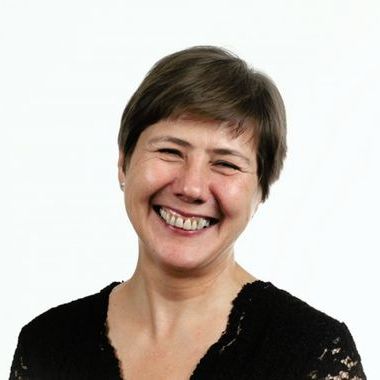
Prof. Valentina Escott-Price is a leading big-data researcher who applies advanced ML and AI to large genomic, clinical, and multimodal datasets to identify risk genes and biological pathways involved in disease. After studying mathematics at St. Petersburg University, she earned her PhD in Statistics from Cardiff University in 2001. She has worked in Cardiff’s Department of Psychological Medicine since 2002 and joined the UK Dementia Research Institute in 2017, where she leads the Bioinformatics and Functional Genomics programme. Combining strengths in mathematics, programming, biostatistics and genetics, she develops innovative computational approaches to illuminate mechanisms of complex disorders.
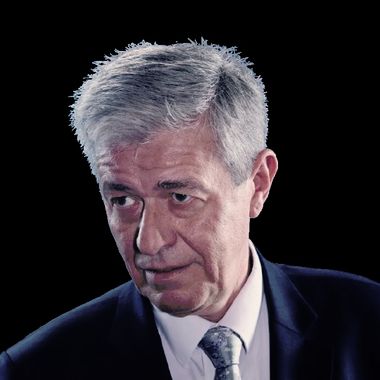
Professor Karl Friston is a theoretical neuroscientist and an authority on brain imaging at University College London (UCL). Widely recognised as one of the most highly cited neuroscientists in the world, he invented Statistical Parametric Mapping (SPM), the international standard for analysing fMRI and PET imaging data. Professor Friston is well known for his groundbreaking formulation of the Free Energy Principle and Active Inference. This unifying theory of brain function proposes that all biological systems are driven by a single imperative - to minimise "surprise" and maintain homeostasis by generating top-down predictions about the world. He proposes that this provides a mathematical framework for understanding sentience, learning, and biological self-organisation. In the context of artificial intelligence, his theoretical position offer a biologically plausible alternative to standard machine learning, advocating for "embodied" systems driven by survival and uncertainty-resolution rather than arbitrary reward functions.
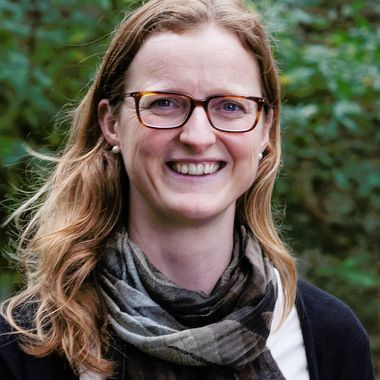
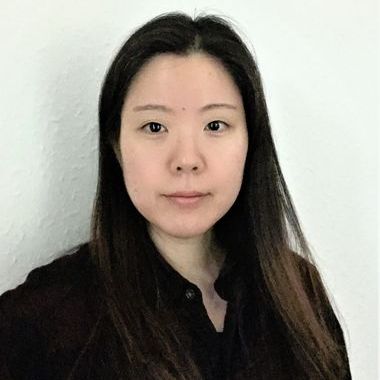
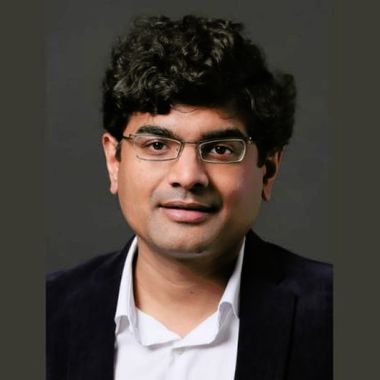
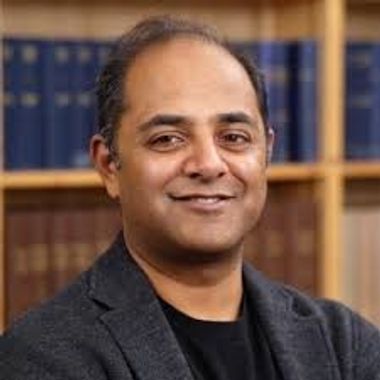
Professor Ramnani is a distinguished Professor of Neuroscience at Royal Holloway, University of London, where his research group uses functional neuroimaging to understand brain organisation, and brain mechanisms that govern higher cognitive function, learning processes, and the control of action.
He is also Vice Dean for EDI at Royal Holloway’s School of Life Sciences and the Environment. Beyond his university roles, he is a member of the Parliamentary and Scientific Committee APPG Advisory Group. He also makes contributions to equity, diversity, and inclusion through his contributions to the BNA Scholars programme, his role on the BBSRC's Expert EDI Advisory Group and his governance role as a member of the Governance Committee of Advance HE's Race Equality Charter. A commitment to fostering a strong, collaborative, and inclusive research community underscores the priorities he brings to the Presidency.
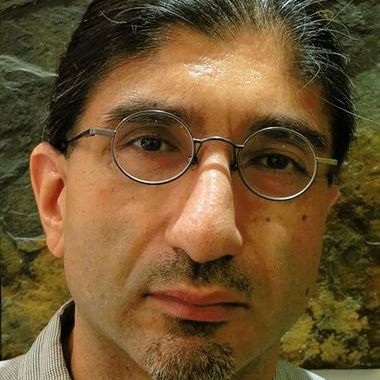
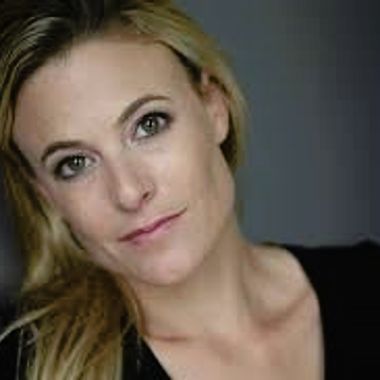
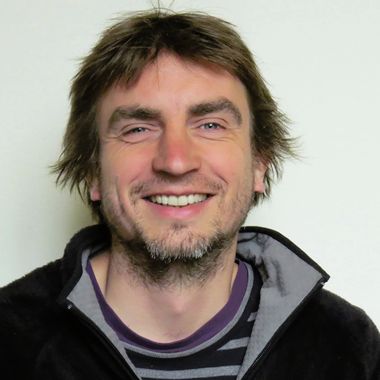
Professor Christopher Summerfield is a Professor of Cognitive Neuroscience at the University of Oxford and Research Director at the UK AI Safety Institute (AISI). Bridging academia and industry, including his work with Google DeepMind, his research sits at the interface of neuroscience and AI. He explores how the learning rules of modern artificial intelligence offer quantitative models for human cognition. This is the central theme of his recent book, Natural General Intelligence: How understanding the brain can help us build AI (Oxford University Press, 2023). In it, he argues that human intelligence relies on a "scruffy" but highly effective toolbox of different learning mechanisms—such as generative modelling, reward learning, and social feedback. At the AISI, he applies these insights to biological and machine information processing to tackle the challenges of AI safety, algorithmic alignment, and the societal integration of frontier models.