Neuro AI: Where Artificial Intelligence Meets the Human Brain is a one-day interdisciplinary event bringing together neuroscientists, AI researchers, clinicians, students, industry professionals, and policymakers to explore the growing relationship between artificial intelligence and brain science.
The programme features talks, case studies, and panel discussions covering three key themes: using AI to advance brain research and medicine, developing brain-inspired AI systems, and examining the ethical and societal implications of neurotechnology. Keynotes and expert sessions will address topics such as dementia prediction, neural decoding, learning in biological systems, and the future of human–AI interaction.
Featuring:

Pro-Vice Chancellor (Strategic Initiatives) and Associate Head (Research and Innovation) , University of Oxford

Professor of Imaging Neuroscience/Wellcome Principal Research Fellow, University College London


Pro-Vice Chancellor (Strategic Initiatives) and Associate Head (Research and Innovation) , University of Oxford
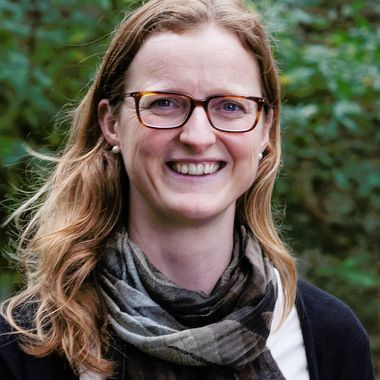
Heidi Johansen-Berg FRS FMedSci is Pro-Vice Chancellor (Strategic Initiatives) at the University of Oxford and Associate Head (Research and Innovation) in the Medical Sciences Division. Heidi also is a Wellcome Principal Research Fellow and member of the Oxford University Centre for Integrative Neuroimaging (OxCIN). Heidi's research group investigates plasticity and recovery in the sensorimotor system, with particular focus on white matter plasticity and activity-dependent myelination. Her research focuses on how the brain changes with learning, experience, and damage. As well as shedding light on how the healthy brain responds to change, her work also has implications for understanding and treating disease.
Professor of Imaging Neuroscience/Wellcome Principal Research Fellow, University College London
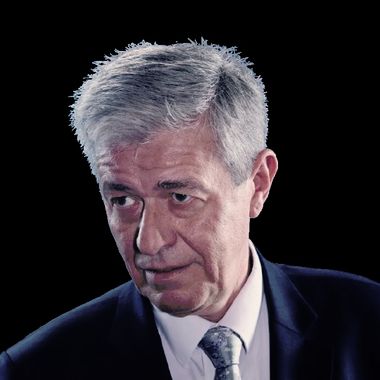
Karl Friston is a world-renowned British neuroscientist and theoretician, widely regarded as one of the most influential scientists of the modern era. Currently a Professor at University College London, his work has fundamentally reshaped our understanding of the human brain.
Friston first gained international acclaim in the 1990s by inventing Statistical Parametric Mapping (SPM). This mathematical framework became the global standard for analysing neuroimaging data, allowing scientists to pinpoint exactly which areas of the brain "light up" during specific tasks. He followed this with Voxel-Based Morphometry, further revolutionising how we measure brain structure.
In recent years, Friston has shifted toward "grand unified theories" of biology. He developed the Free Energy Principle, a provocative mathematical theory suggesting that all living systems—from single cells to entire societies—act to minimise "surprise" or uncertainty about their environment. This concept of the brain as a "prediction machine" has profound implications for artificial intelligence, philosophy, and our understanding of mental health conditions like schizophrenia.
A Fellow of the Royal Society and one of the most highly cited researchers in history, Friston’s multidisciplinary approach continues to bridge the gap between physics, biology, and computer science.

Director, Gatsby Computational Neuroscience Unit
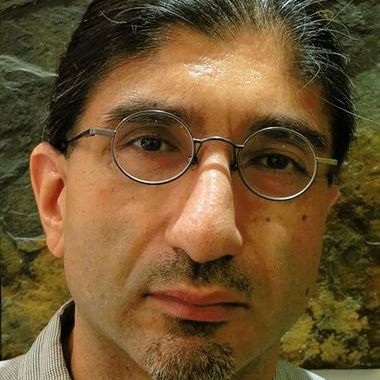
Professor Maneesh Sahani is a British-based computational neuroscientist and machine-learning researcher known for his work on how the brain performs complex computations such as perception, learning, and decision-making. He is a Professor of Theoretical Neuroscience and Machine Learning at University College London (UCL) and serves as Director of the Gatsby Computational Neuroscience Unit, one of the world’s leading research centres linking neuroscience and artificial intelligence.Please accept {{cookieConsents}} cookies to view this content