Meeting of the Minds through Imperial's BNA Local Group
Interest in neuroscience at Imperial and across London is high. But despite the multitude of labs locally that work on neuroscience problems and on the treatment of neurosurgical and neurological disease, opportunities for students and others outside of these labs to learn more about the field and form connections are sparse. The Meeting of the Minds conference – run by Imperial area BNA Local Group members from across both Imperial and Imperial College Healthcare NHS Trust and in close collaboration with the Imperial College Neuroscience Society – directly aims to bridge that gap.
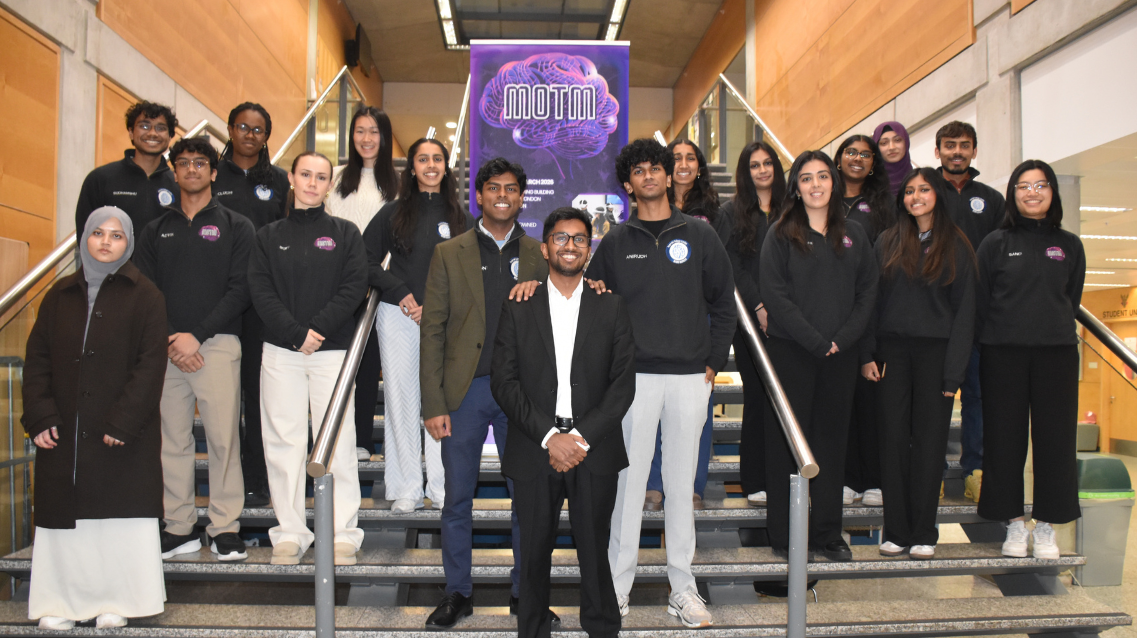
The organisers of the 2026 Meeting of the Minds conference
The 2026 iteration of the MOTM (Meeting of the Minds) conference was held on 7th March in the Sir Alexander Fleming Building, in the South Kensington campus of Imperial College London. The MOTM is the UK’s largest student-led neuroscience conference, and brought neuroscience enthusiasts from across the Imperial community together in a CPD-accredited day that was guaranteed to nurture their interest in career-relevant directions. Over 100 undergraduate students, postgraduate students, early career researchers, medical students, and even sixth formers considering careers in neuroscience/medicine came along and participated in a full day of exciting workshops and insightful discussions, held on a weekend to make attendance simpler and to maximise the time available for a packed programme.
Professor Oliver Bandmann discussed drug discovery for Parkinson’s disease, and leading neurosurgeon Professor Keyoumars Ashkan MBE shared recent advances in surgical neuro-oncology. Workshops included brain dissection, EEG reading, and panel discussions of the range of career opportunities across neuroscience.
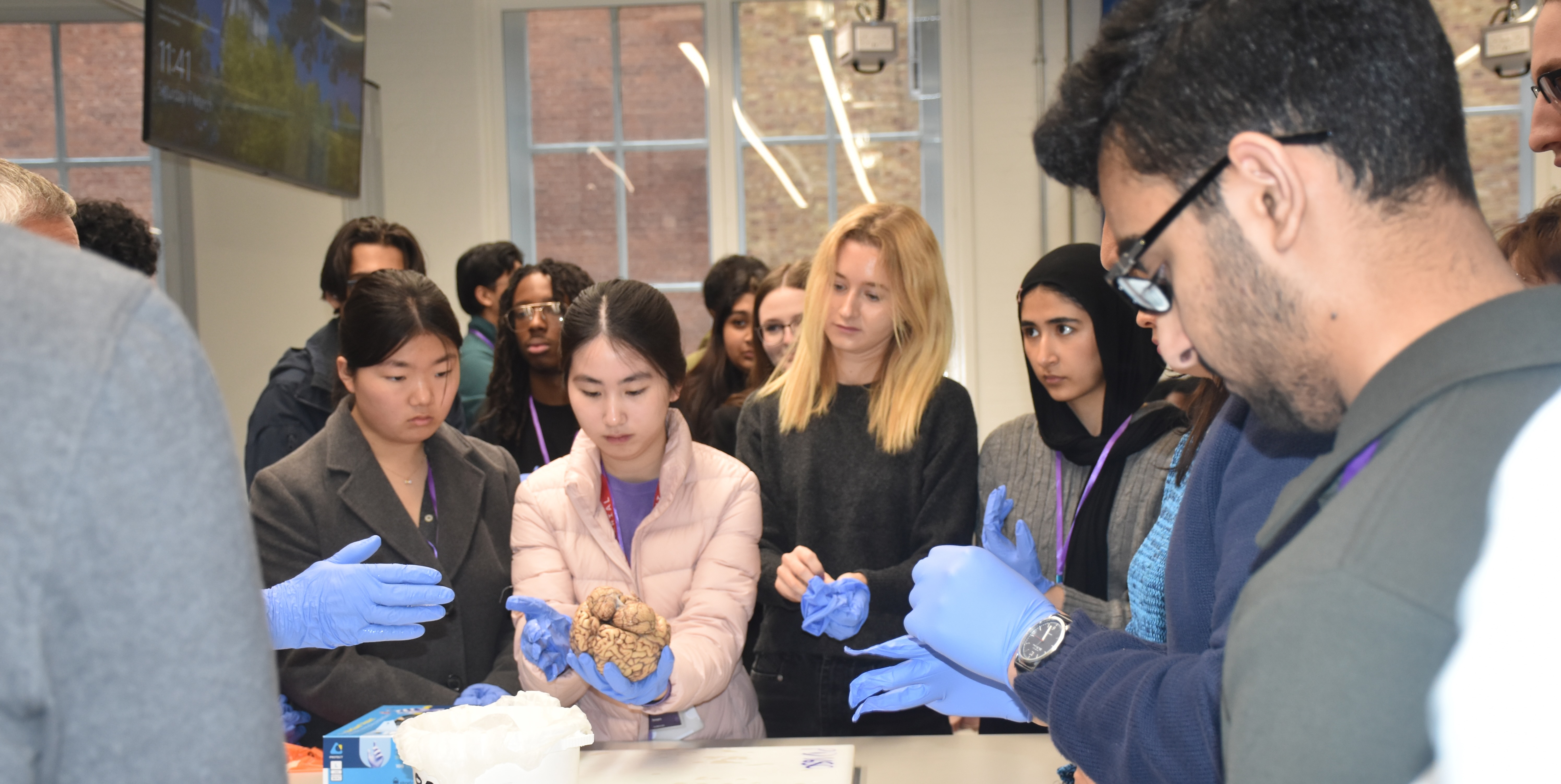
Participants handle brain tissue during the dissection workshop
The day was punctuated with a poster competition and networking lunch, followed by an afternoon of all-star presentations. Professor Dame Pamela Shaw talked about translating neuroscience into patient benefit for motor neuron disease and Professor Sophie Scott discussed the neuroscience of laughter. The final talk of the day was Professor Simon Shorvon who discussed the challenges of classifying and defining neurological disease.
The day was highly engaging for students and others considering careers in neuroscience. One attendee reported "The event was organised really well and helped me learn more about neuroscience and careers in medicine which I am interested in." Another said "I had a really fun day today at Imperial, it was my first time here and the lecturers were truly world-class." Local Group Representatives took the opportunitity to share the benefits of BNA membership and encourage attendees to become involved in the Local Group and collectively create future opportunities that meet their career development needs: around 50 attendees newly joined the BNA as a result.
If you could change one thing about neuroscience in your local area, what would it be? Do your peers and others across the different institutions in your area feel similarly? By joining your BNA Local Group and working with your Local Group Representatives to devise a strategy and secure project funding, together you can drive local change, and take collective ownership over the future of neuroscience where you are.
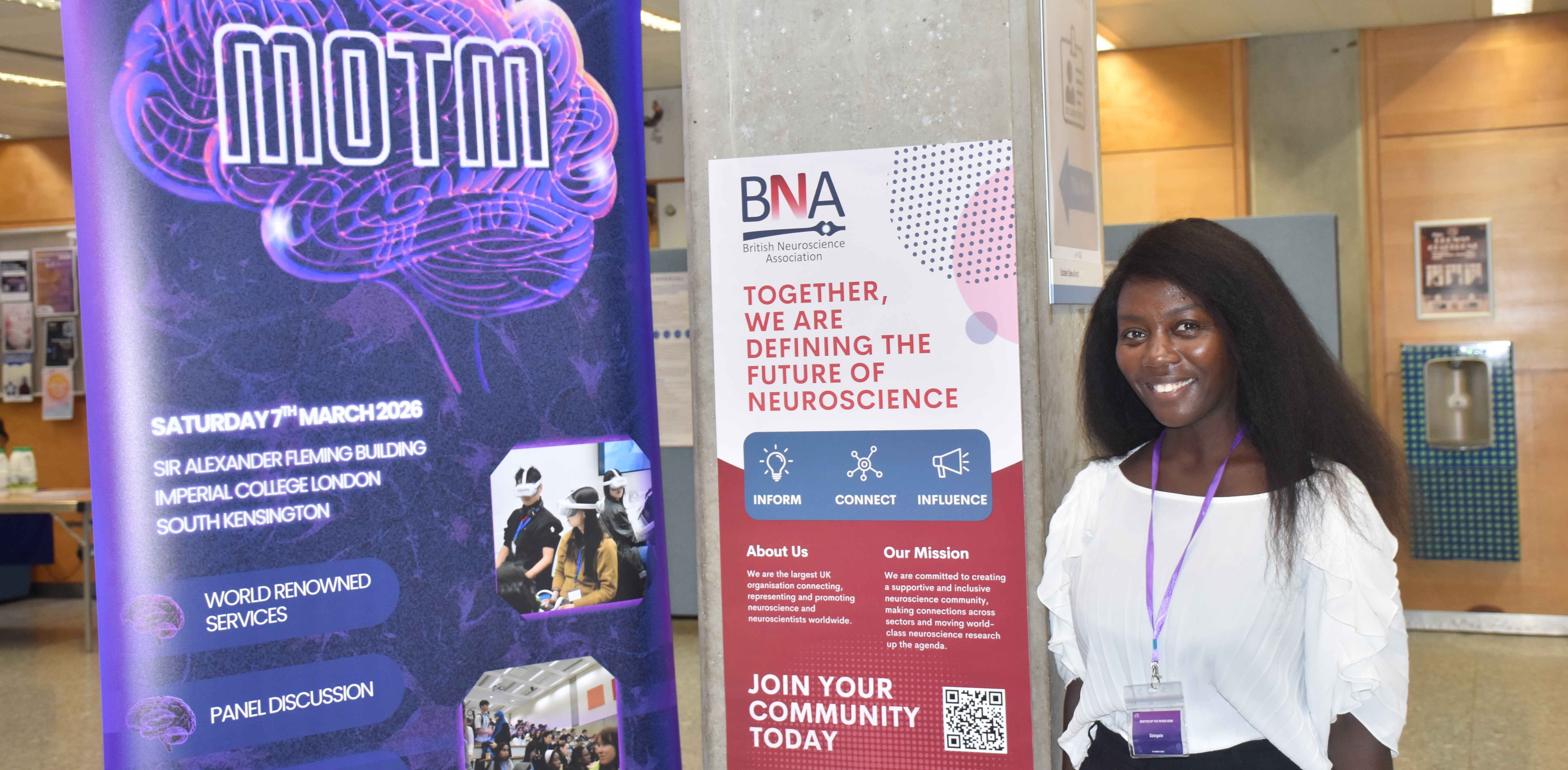
BNA Local Group Representative Dr Sheila Mashate, based at Imperial College Healthcare NHS Trust, on hand to speak to attendees about getting involved