SOLD OUT
On the 24th-25th of February, more than 700 researchers from across the country, and further afield, came together in Manchester to hear about cutting-edge science within the dementia research field at the Alzheimer’s Research UK 2026 Conference.
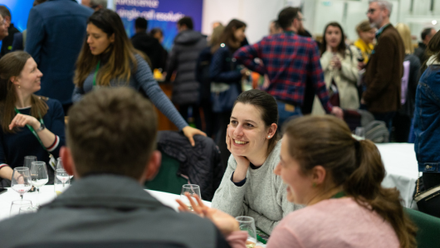
Across the two days, there were a variety of engaging talks on topics such as molecular and cellular biology, AI and data science, and the effect of diet and nutrition on the brain. As well as talks, there were a plethora of posters presented during breaks between sessions and networking opportunities during the day as well as at the evening event, hosted at the beautiful Manchester Art Gallery.
The conference was opened by an inspirational talk from Charlie Quirke, son of the actress Pauline Quirke MBE, who spoke about his family’s life after publicly announcing Pauline’s dementia diagnosis in 2025. Since then, with support from ARUK, Charlie carried out a 150 km trek over 5 days visiting pivotal places throughout his mother’s life- raising an incredible £300,000 for the charity. His talk was moving, serving as a poignant reminder of how profound of an impact dementia has on families and why research into finding a cure is so important.
A reoccurring theme of the conference was the exciting advancements happening within drug development and clinical trials. Plenary speaker, Prof. Catherine Mummery (UCL), discussed the recent developments in treatment for Alzheimer’s disease including improvements in drug penetration into the brain via “Brainshuttle” active transport, gene silencing and how changes in early phase clinical trials can improve accessibility for patients and overall performance.
A conference highlight was the greatly anticipated debate “The Future of Alzheimer’s Disease Prevention: Disease-Modifying Therapies or Lifestyle Modification?”. This saw Professors with clinical expertise discuss what will be the key strategy to preventing AD- implementation of breakthrough drugs and personalised medicine or encouraging people to maintain a healthy lifestyle through diet and exercise. With compelling arguments from both sides of the debate, the final vote as put to the audience- which saw disease-modifying therapies coming out on top. Despite this, the consensus was that both strategies should be used together to try to combat Alzheimer’s disease.
Prof. Tara Spires-Jones, UKDRI University of Edinburgh and former president of the BNA, received the Stuart Pickering-Brown Prize- a lifetime achievement award recognising her contributions to dementia research, science communication and the development of early-career researchers. Prof. Spires-Jones’ talk focused on the importance of synapses in Alzheimer’s disease, showcasing her work into how amyloid-beta and tau contributions to synapse degradation, particularly how oligomeric tau spreads across the brain via synaptic connections possibly through the BIN1 protein.
The conference was concluded by plenary speaker Prof. Henrik Zetterberg (UCL), who gave an insightful overview of developments in biofluid based biomarkers for dementia over the last 25 years. Starting at amyloid-beta 42 in cerebral spinal fluid to the identification of new markers, including neurofilament light chain and blood-based test for Alzheimer’s disease. It was particularly interesting to hear about the developments in antibodies to differentiate between plasma brain-derived tau and peripheral “Big tau” using their 200 amino acid difference in length.
Altogether, the Alzheimer's Research UK Conference 2026 was enlightening and inspiring couple of days with attendees leaving with the feeling that we are closer than ever to finding a cure for Alzheimer’s disease.
---